




PBS: Advantage and Weak Point by Glauber Method
Precipitated barium sulfate is an important fundamental chemical raw materials. Because chemically it is of inertness,good stability,acid and alkali-resistant, moderate hardness, high brightness, high gloss and fine ability of absorbing harmful x and γ-ray, precipitated barium sulfate is recognized as an environmentally friendly functional material.
It is widely as used a filler in a variety of transparent enhanced masterbatch, color masterbatch, paints (powder coating, automotive paint, marine paint, exterior wall paint, anti-corrosion paint,) PCB inks, printing inks, modified plastics (PP, ABS, PE, PS, P A, PBT, PET, electric appliance housings, films, building plastics, etc.), an elastomer, a polyester, paper, cosmetics and others.
It can be used as medical swallow agent (called barium meal), expansion rods for battery cathodes, manufacture of ceramic, enamel glaze material, surface coating agent for printing paper and art paper, sizing agents for textile industry, clarifying agent for glass products(for anti-foaming and increasing gloss).
It can be used as anti-radiation protective wall material used for nuclear facilities, nuclear power plants and X-ray laboratories,which can play a good shielding effect. Having an X-ray image function it can be used for medical fibers and developing children's toys. For drainage, speakers, sound sytems it can effectively isolate various noises. It can also be used in industries such as perfumery and pigments.
Production technology of Glauber - Barium sulfide method
Glauber method is the traditional method as of mature technology and strong applicability, the feeding material are barite and glauber, and the byproduct is sodium sulfide.For this method, the chemical reaction formula is as follows:
BaSO4 + 4C → BaS + 4CO
BaS + Na2SO4 → BaSO4 + Na2S
Specific process is: barite and coal powder shall be mixed in a certain proportion, and then feeding into the roaster from the rear, contact with high-temperature air, and make reduction reaction at high temperature of 1100 ~ 1 500 ℃ . the reaction requires heat source is resulted from combustion of pulverized coal or heavy oil.
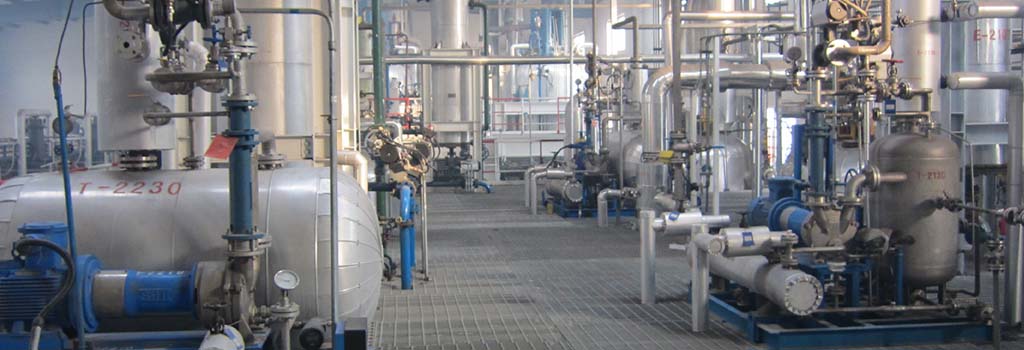
As result, the preparation of barium sulfide clinker (commonly known as "black and gray") is made, and after leaching then sedimental clarification, concentration of barium sulfide will reach up to 130 ~ 160 g/L. Meanwhile amount of barium sulfate waste water (dilute sodium sulfide solution) shall be injected into the nitrate tank, and heated with steam to above 40 ℃. Then start the mixer, feed glauber into the tank, and continue to heat up to 90 ℃. The impurites of calcium and magnesiumas shall be removed using sodium, concentration of nitrate water shall be controlled between 1.2 ~ 1.22 g/cm3, and then nitrate solution shall be insulated, settled and reserved.
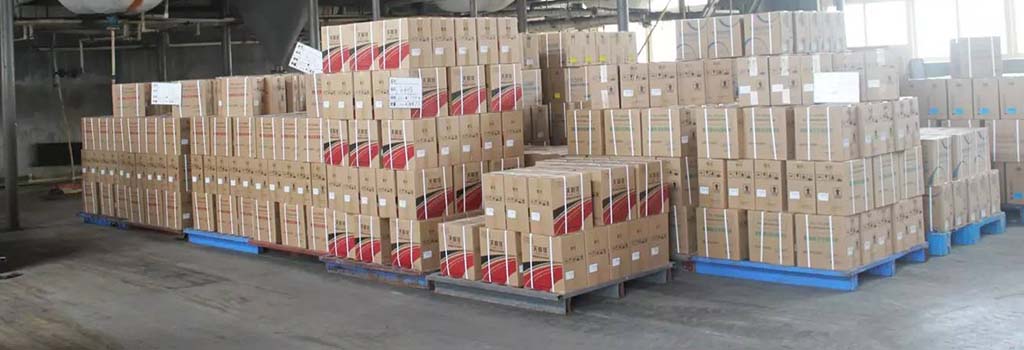
After the abovementioned two solutions are clarified, clear sloutions by a certain percentage shall be put into the chemical tank, then metathesis reaction will be made, and the reaction shall end at the equivalence point or when achieving a slight excess of halogen barium. Next step, The barium sulfate and sodium sulfide solution prepared together shall put into the solid-liquid separation filter, and clear solution of sodium sulfide shall flow into recovery system with the process of be concentrated by evaporation. The solide barium sulfate filled will be discharged into the slurry pool after being washed with water and pickling, and during the process the pH value shall be adjusted up to 2-8 with sulfuric acid or phosphoric acid. After acidification, frame filter pressing machine will be used to remove excess water, then barium sulfate cake will be transported through the conveyor to dryer drum for drying, and eventually will be pulverized into various fine powder by Raymond and final precipitated barium sulfate will be packed in warehouse.
As by-product of this process, sodium sulfide is widely used in the pharmaceutical, paper, leather and hair removal agents, sulfur and other industries, especially the rapid development of special engineering industries such as polyphenylene sulfide contributes to the development of sodium sulfide industry. In traditional dye industry, as foreign production plant closed, and Chinese sulphic enterprises can continue expanding production capaction, so that China has become the world's largest producer and consumer of sodium sulfide, sulfide dyestuff has also become a major downstream users of sodium sulfide.
Glauber method is recongnized as longer production process, yet with more protruding pollution issue.Still the technology is mature while it can bring industrial sodium sulfide as by-product. Whiteness of precipitated barium sulfate is very good, and after mechanical grinding, the maximum grain size is of 10μm, while the average particle size is about 0.5 ~ 1.2 μm, so particle size distribution is broad and not so even, thus it may generate light scattering in usage, so that the film is bleak with not high gloss. So such properties produced by this process may limit its use in high grade paint and coatins, and it can just meet requirement of general quality in middle and low filed as in ink, ceramics and other areas.
A Dramatic Shift for US Sebacic Acid: 2002
The US sebacic acid industry changed significantly last month with the exit of two players and the entrance of a newcomer. Previously, the only producers in the US, Arizona Chemical and CasChem Inc., both opted to leave the market late last year under pressure from low-priced sebacic acid imports from China and high production costs.
The decision to exit the sebacic acid business comes after a great deal of study by the company, says Gerald C. Marterer, vice president, Arizona Chemical. Overseas competition coupled with the substantial amount of capital that would be necessary to keep the business competitive were key factors that led to the decision to exit the sebacic acid market.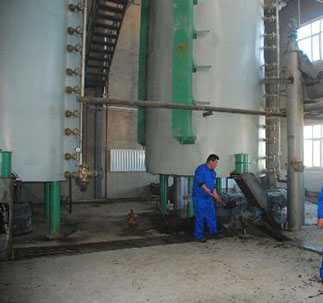 Arizona Chemical permanently shuttered its Dover, Ohio, sebacic acid facility last month. The company also relocated its tall oil-derived ester products manufacturing to other facilities within its system. The investment necessary for upgrades to the esters production equipment at Dover led to the decision to discontinue making esters, Mr. Marterer comments.
The shutdown resulted in the elimination of 47 positions at the plant, says Arizona Chemical. The remaining manufacturing operations at the Dover plant, which include dimer acids, fatty acids and polyamides, were not affected. Arizona Chemical still continues to produce ester products, which include tallate, dimerate, polybasic, polyol and stearate esters.
CasChem, a subsidiary of Cambrex Corp., also emptied its sebacic acid inventories and mothballed its highly automated sebacic acid plant in Bayonne, N.J., last month. The company began producing sebacic acid in early 2000 using proprietary processing technology. Like Arizona Chemical, Cas-Chem considers the domestic market unprofitable because of pressure from cheaper Chinese imports. However, Cas-Chem will continue to produce sebacate esters, which is said to be more profitable and where the market tends to focus more on.
A New Player in the Market
Undaunted by the competitive pressures of Chinese imports and the currently flat market situation, Genesis Chemicals Inc. has entered the US sebacic acid market. A privately held company, Genesis started full-scale production of sebacic acid last month at its new plant in Loveland, Ohio. The company began construction of the plant 18 months ago. Including additional capacity to be completed by the end of the first quarter, the plant's total capacity will be 20 million pounds per year. For sebacate esters, which include dioctyl sebacate, dibutyl sebacate and dimethyl sebacate, annual capacity is placed at around 32 million pounds. Total investment in the plant was quoted at between $5 million and $10 million.
Genesis Chemicals aims to accomplish several strategic objectives with the new domestic operations, says David Bow, president and co-owner. With the exit of Arizona Chemical and CasChem from the market, we have put together a significant capacity to meet the needs for sebacic acid in North America while freeing up the much needed capacity in our Asian operations to supply Europe and the Far East.
The company currently has a full-scale manufacturing facility for castor oil derivative production through a joint venture in China and recently phased out sebacic acid production in Seoul, South Korea. Genesis Chemi-cals' Chinese venture also grows its own castor crops in Northern China for captive use. The operation in China manufactures a full line of castor oil derivatives, and we are the only castor oil derivatives manufacturer that grows our own castor crops, notes Mr. Bow. This emphasizes our commitment to providing consistency in quality and value by understanding these products naturally occur when starting with the smallest of details. As long as we generate good crops, it puts us in a better cost position at the same time, Mr. Bow adds.
Founded in 1999, Genesis Chemi-cals began focusing on the manufacture of sebacic acid and other castor oil derivatives when the company partnered with a Chinese supplier of castor oil derivatives in late 1999. The company currently manufactures and markets chemical raw materials used in numerous industrial applications in markets such as lubricants and greases, water treatment, personal care products, detergents and sanitizers, coatings and adhesives, and food and flavors.
With the start-up of the new sebacic acid plant in the US, the company has already received positive feedback from the market place, according to Mr. Bow. Genesis Chemicals is committed to being a global leader in the manufacture of sebacic acid and its corresponding esters. Our goal is to focus on providing the highest quality products in the market, he says. Although our labor and manufacturing cost is certainly higher than the Chinese competition, we do have certain unique and proprietary processes that provide better quality of sebacic acid products than our competitors.
Despite the sebacic acid market's being fairly flat for the past two years, growth potential in the specialty chemicals sector remains strong, states Mr. Bow. Of roughly 200 castor oil derivatives used in the industry, sebacic acid is among the largest volume products. The projected growth for sebacic acid and its esters lies in new markets and applications, he notes. By introducing very high quality products and understanding the need for competitive pricing, Genesis also expects growth in the current markets for sebacic acid and its esters.
Pricing for sebacic acid in the US has reportedly been declining for the past two years under the deluge of Chinese imports. China is a major manufacturer and exporter of sebacic acid globally, being the second largest producer of castor oil after India. In the US, total imports of Chinese sebacic acid from January to October last year were around 2.2 million pounds, with average import values of around $1 to $1.40 per pound. Quoted at around $2 per pound in 2000, the price of high purity grades of sebacic acid fell to around $1.65 per pound by mid-2001. However, pricing for sebacic acid climbed late last year because of a sharp increase in global castor oil pricing in the fourth quarter.
 Super User